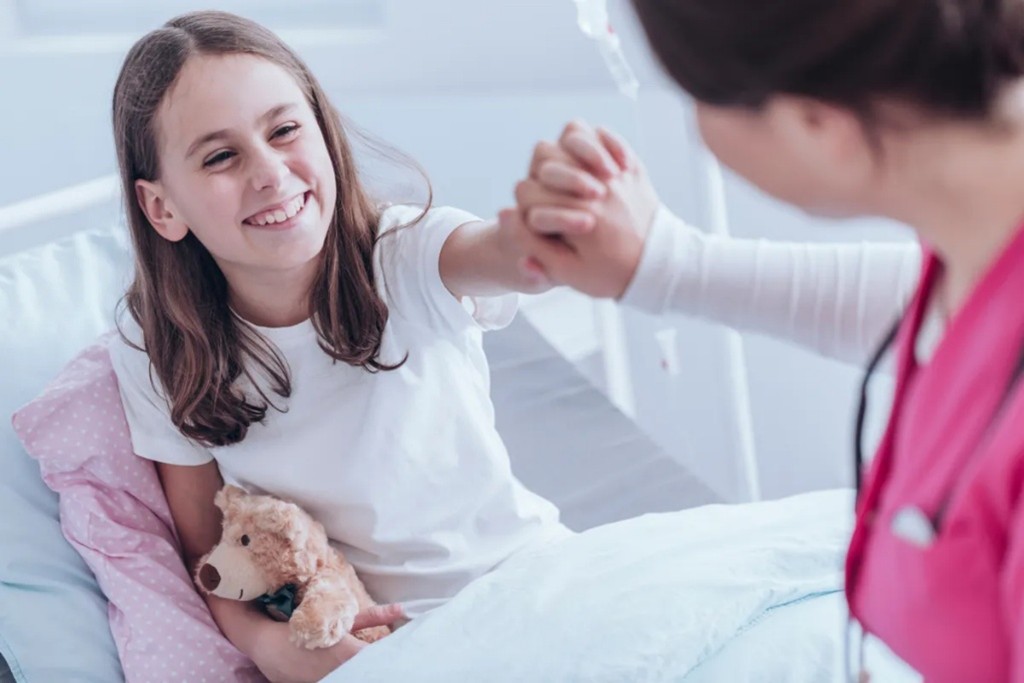
Nurses - The Backbone of Patient Care
Recently, I visited a friend in the hospital. Stepping into the elevator, I pressed the button for the fifth floor and the doors slid shut. Seconds later, they opened and I moved aside to make room for a nurse pushing a wheelchair.
I glanced down to see her passenger and smiled at the little boy in the chair. Small and frail, he sported a Yankee’s cap atop his obviously bare head.
The nurse paused and leaned toward him to adjust a pillow behind his back. “How’s that, J.J.?” she asked softly. “More comfortable for you?” Her voice was gentle and unhurried. The boy looked up at her and smiled in return. It was a simple exchange, the kind of moment that could easily pass unnoticed.
“A fellow Yankees fan!” I cheered, gesturing toward the cap. “Did you see the game last night? That was a close one.”
J.J. laughed and nodded in agreement. In that instant, the tightness in my throat from the hushed undercurrent of sorrow I’d felt for him eased as his laugh and the shared simple moment in the easy language of baseball erased my discomfort.
However fleeting the episode, something was suddenly rekindled in me. In that instant, there in the elevator, I was carried back more than forty years to a place and a moment that has never fully loosened its hold.
It was the mid-1980s, and it was my first week working at Memorial Sloan Kettering Cancer Center. Because of the nature of my new job, I had an extensive orientation that involved meeting with every department, and on that day I was heading up to the pediatric floor.
A feeling of trepidation had overtaken me. I had never seen a child in treatment for cancer, and as a parent of a healthy toddler, I couldn’t help but think about what it must be like, emotionally and psychologically, to be the parent of a child with such a serious illness. Left to its own devices, my imagination stirred exaggerations of heartbreak and apprehension. A knot formed in my stomach so tight it felt physical, and I worried I wouldn’t be able to handle what I would see when the elevator doors parted.
I watched the numbers above the elevator door tick upward, slowly, deliberately, until they reached nine. I was to meet with the director of pediatric nursing, who would give me a tour and discuss plans for her department’s reorganization.
As the doors opened, my anxiety peaked.
And then, almost instantly, it dissolved.
The first thing I noticed were the colors. The walls were bathed in warm oranges and cheerful yellows that felt both lively and soothing at the same time. The hallways were adorned with artwork, dozens of drawings clearly made by children. Splashed across the scenes were smiling figures, families holding hands, suns and flowers, and hearts and homes.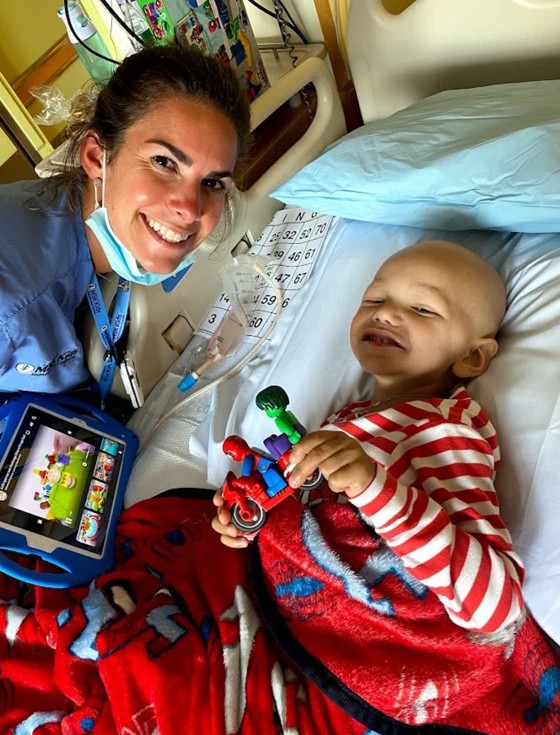
They weren’t depictions of illness. They were portraits of life.
Just down the hall, a large, open, welcoming play area was buzzing with activity. Children moved freely through the space, many spilling out of an art therapy session, proudly and excitedly sharing their creations. Some were tethered to IV poles, yet that seemed entirely unremarkable there, part of the landscape rather than anomalous. Many of the children were bald, a detail that appeared to barely register with them. Or perhaps it did, but whatever weight it carried was softened by the unspoken understanding that no one in that room was facing what shaped their days alone.
One boy, no older than eight, wore a heavy splint on his arm. He was so thin he looked as though he might not even be able to hold a spoon. Yet when a nurse bent down and told him pizza was on the lunch menu, his wide brown eyes brightened, and his smile filled the room with light.
“Pizza! Really?” he shouted, giddily.
“Pizza!” the nurse confirmed, laughing. “I told them extra cheese for you.”
Nearby, a nurse approached two girls engaged in animated conversation. She bent slightly, lowering herself to their level.
“Hey, you two,” she said warmly, “Can you let me in on the gossip?”
The girls giggled conspiratorially.
“Fine,” the nurse playfully conceded. “You don’t have to tell me,” she teased. “Maybe later? In the meantime, though, Sally, it’s time for your infusion. But as soon as we’re done, you can get back to gossiping. Before you know it, it’ll be lunchtime.”
No fear. No drama. Just light-hearted banter, with reassuring overtones of calm, trust, and genuine kindness.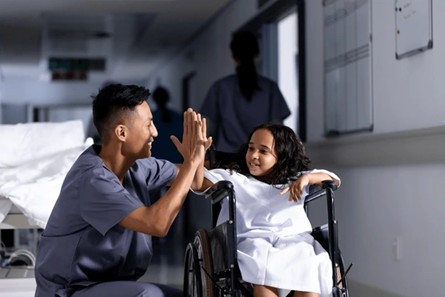
I stood taking it all in, and what struck me the most in those few minutes was that each child, every single one, appeared happy. Not pretending. Not distracted. Rather, they seemed genuinely cheerful. Toys, books, and games were everywhere, fully in use and thoroughly enjoyed. A far cry from the somber scene I anticipated.
Certainly, the kids were connected by something serious, very likely frightening and, undoubtedly, for a few, existentially so. I wouldn’t presume to mistake their outward appearance for the emotional complexity that may lie beneath the surface. But in this space, they had a commonality that bound them. It was a place where they felt understood and safe. This was their community, and from it they drew strength.
That didn’t come about by accident. At the center of it all were the nurses.
Of course, the children’s families were ever-present, lovingly caring for each child. At the same time, many professionals devotedly cared for these children – physicians, rehabilitation specialists, art and music therapists, dietitians – each highly skilled and deeply committed. But day after day, hour after hour, it was the nurses who were there. They knew which child needed distraction and who needed quiet. They read subtle shifts in mood and body language, keenly aware of when pain was about to surface or nausea was about to take hold. They intervened before a child ever had to ask.
I watched as the nurses administered chemotherapy with a measured assurance that made something potentially terrifying feel manageable. They monitored and interpreted vital signs not as numbers, but as signals, clues to how each child’s body was reacting and responding. They adjusted pillows, flushed central lines, drew blood with practiced gentleness, and stayed close during procedures that demanded both technical precision and emotional presence.
The nurses patiently translated medical complexity into language that could be easily understood by the patients, their siblings, their parents. They answered questions they’d answered a hundred times before, never rushing, never dismissing fear or confusion, knowing that anxiety often made it difficult for the information to fully take hold the first time.
They comforted parents who fought back tears as they tried to be strong and present a hopeful exterior. They treated the children with a highly attuned amalgam of sincerity, warmth, and reassurance. They collaborated constantly, weaving together care plans with oncologists, social workers, dietitians, and therapists so that no child was seen in fragments, as less than a whole human being.
But what impressed me most was the overall tone they set.
On this patient care unit, the kids were not defined by their illness. Here, they were defined by their personalities, their humor, their friendships, their curiosity, and their need to feel understood. The nurses believed that each child was unique, purposeful, and worthy of experiencing joy.
After taking it all in, like a deep inhale, I met with Jane, the nursing director. The first thing I asked her was about what sustained the staff. How do they do this, day after day?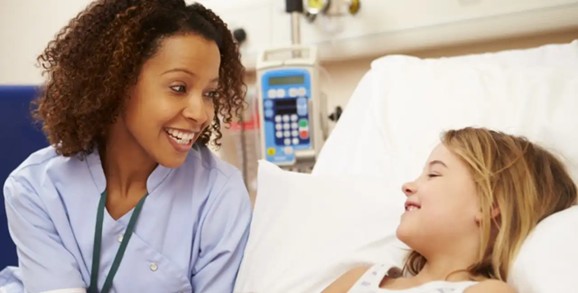
Jane smiled thoughtfully. “We get as much from the children as they get from us,” she said.
We discussed the nurses’ roles and responsibilities. After a few minutes, I hesitated, then asked the other question that had been weighing on me.
“What’s it like,” I broached, “To come onto your shift at seven in the morning and learn that the six-year-old you’ve been caring for the past two weeks died overnight?”
Her expression softened, but she didn’t look away. “It’s impossible,” she said. “Emotionally, it’s impossible.”
Jane explained how the nurses support one another, formally through support groups, informally through conversations in hallways and break rooms. She shared how they lean on one another, how they grieve together.
“But more than anything,” she continued, “There’s another child in the next bed who needs us. We don’t move on from yesterday’s loss. We move sideways to today’s young person who is here and still needs our attention.”
Jane paused. “Don’t misunderstand – it takes a toll. It has to. We wouldn’t be human otherwise. But then there’s a child about to get her first chemo infusion, and she’s scared. She needs reassurance. She needs someone steady.”
That, I realized, was the heart of it. Presence. Continuity. Courage without hardness. It translated remarkably into an atmosphere that celebrated each patient’s yearning to be a child and embrace the wonders of life.
What stayed with me most about that pediatric oncology floor was how alive it felt. I had expected sorrow but found vibrancy. I had expected solemnity but found laughter and energy. Not to mention gossip and pizza!
It was the nurses who brought that about. 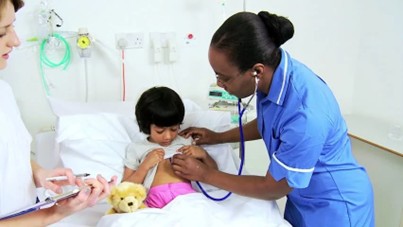
They created a space where children could experience the profoundly important sense of belonging, where illness did not erase identity, where connection replaced isolation. They cultivated a community that nurtured the children and, in many ways, nourished themselves.
It was, and remains, one of the most inspiring things I have ever witnessed.
At the close of that first unforgettable encounter, and what has stayed with me for decades, was a broader conviction about nurses. I have worked with hundreds, maybe thousands, of dedicated nurses over the years. Long after specific moments blur, just like the nurse reassuring J.J. in the elevator, the extraordinary work of nurses remains unmistakable. It so often unfolds without applause, without headlines, and without full recognition, yet it forms the foundation on which all patient care rests.
Their watchful closeness and expert hand reassure us that even in the most frightening circumstances, we, as patients, are understood, supported, and never left to face the challenge and uncertainty of illness on our own.
Nurses are not simply the executors of medical plans. They are the grounding presence that makes those plans livable, comprehensible, and humane. They are the backbone of care not because they do everything, but because they make everything possible.