Unsteady Ground - My Father's Wisdom for an Uncertain Age
My friend Alex told me that his daughter had just been laid off. She had spent nearly two years at a public relations firm, editing copy and proofreading press releases for a pharmaceutical client. By all accounts, her work had been excellent, and the layoff had nothing to do with her performance. The position was simply eliminated. AI, they told her, could do it instead.
What Alex said next stopped me cold. He explained that he advised his daughter that instead of searching for the best job, perhaps she should concentrate on finding something that offers security.
I had heard those words before.
Rewind almost 45 years.
The offer was presented to me on a Tuesday, and by Wednesday I already knew I wanted to take it. I was young, barely a year or two into my first job out of graduate school, still finding my footing in the professional world but already feeling that familiar restlessness that comes when you sense there is more out there waiting for you.
The new position was at one of the most respected hospitals in the country, the kind of institution whose outstanding reputation had been built over generations. More responsibility, a bigger challenge, and yes, a higher salary. By any measure, it felt like exactly the kind of opportunity you seize without looking back.
But before I did anything, I wanted to talk to my father, George
That was always my instinct when something important was happening. Not because I needed his permission, and not because I was uncertain, but because his presence in a conversation made everything feel more considered. George was not a man who rushed toward opinions. He listened first, really listened. He was curious and careful, and he never offered a judgment before he had fully weighed the issue. I admired that about him more than I could ever quite articulate, and I always hoped a little of that would find its way into how I approached decisions.
So, we sat together as I laid it all out. The hospital's name. The role. The expanded scope of the work. The salary. I could hear the excitement in my own voice, and I am sure he could, too. This was good news, and I expected him to receive it that way. In this case, given the obviousness of the opportunity, it was less that I was seeking his advice and more that I wanted him to share in the joy.
As he always did, he listened without interrupting, his expression attentive and warm. And then, after a pause that lasted just a moment longer than I expected, he looked at me and said something I have never forgotten.
"Are you sure you want to give up something secure?"
I remember the feeling that came over me. Not disappointment exactly, but genuine surprise. I had just described one of the most reputable hospitals in the world, an institution that had been a cornerstone of medicine for longer than either of us had been alive. The risk, if there was any at all, existed somewhere in the realm of the theoretical. And yet my father, a man I considered among the wisest I had ever known, sat across from me and saw precariousness where I saw promise.
I left that conversation with a knot of confusion I could not quite untangle. It was not like George to be shortsighted, and yet that was the only word I could find for it at the time.
But I kept thinking about it, the way you do when something your father says doesn't quite feel right. And slowly, over the days that followed, what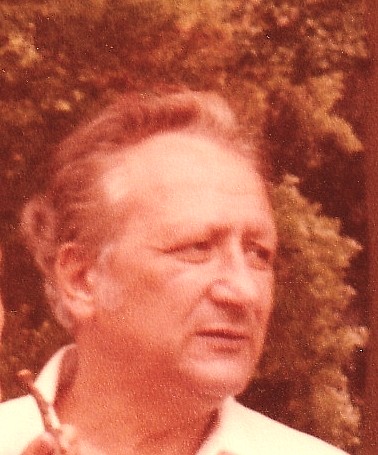 was puzzling began to come into focus, pieces fitting together.
My father was a young child when the Great Depression took hold. Not history, not something he had read about in a classroom, but the lived, daily reality of such impressionable years. He had watched as neighbors lost everything, absorbing tragedies at an age when understanding is formed by gut-churning scenes – long lines just to get a container of soup, if it could be called that, making a single small chicken last an extra day for the entire family, men in tattered suits sitting on curbs with nowhere to go, makeshift shanties cobbled together from scraps of wood and tin, children in threadbare coats and worn-through shoes going to school hungry, the ground beneath giving way without warning.
The world had become a Dystopian tableau, imagery that never left him. It didn't matter that the Depression had long since ended or that life had completely changed around him. It had been etched into his psyche too permanently for circumstances to revise.
And beyond that, though he was born in this country, in everything they did, his family carried the sensibility of people who had come to the U.S. from a place where hardship was inevitable and security was elusive. They were determined to never again be caught without footing. Work hard. Keep your head down. Do not reach too far ahead. The safety of today is worth more than the dreams of tomorrow. These were not ideas consciously chosen, but rather instincts borne of all they had endured, passed down not in words but in the way they moved through their tiny corner of the universe.
My dad was far from shortsighted. He was being himself, fully and faithfully, in the only way his personal history had taught him to be. The love behind his words was never in question. He wanted my family and me to be protected, to have what he had spent his whole life trying to hold onto. That he and I saw risk so differently was not a failure of his wisdom. It was simply a testament to how indelibly our earliest experiences shape us, in ways that even the people who know us best cannot always see.
I took the job. It was the right decision, of course, and somewhere he knew that too, even if he could not quite say so right then.
But I have thought about that conversation many times over the years, with a gratitude that has only grown. Because what my father gave me in that moment, without either of us realizing it, was something far more valuable than an opinion about a career move. He gave me a window into what made him who he was, into the underlying fears and the hard-won instincts that had colored everything about the man I loved so dearly. And understanding that, with tenderness and without judgment, turned out to be one of the most important things I ever learned.
Hearing Alex echo my father's words to his daughter, I find myself wondering whether we are arriving at a moment that would have felt oddly familiar to my dad, a moment where the old instinct toward security is no longer simply the remnant of a Depression-era childhood, but a reasonable response to a world that is shifting beneath us in ways we cannot yet fully see. Or, more aptly, cannot yet barely see.
Until this moment, I had not fully reckoned with how differently two generations can grasp the same lesson. Will history repeat itself?
The difference, of course, is that my father's caution was born of scarcity. Alex's daughter is facing a scarcity that is just beginning to take shape, one driven not by economic collapse but by technological transformation that is rewriting which skills require a human hand and which could be replaced overnight.
My father, who passed away in 2003, took security for granted as the bedrock necessity of a life well lived, not because he lacked ambition or imagination, but because the world in which he came of age had taught him, irrevocably, that without it nothing else was possible.
Coming of age in a different era, along with the privileges it afforded me, I had learned to take something else for granted entirely, which is that work should be meaningful, enriching, and ever-expanding toward something larger. I had come to assume that fulfillment was the baseline, the floor rather than the ceiling.
My dad’s voice, carried across all these years through to Alex’s kitchen table conversation, is a striking reminder that the world can waver beneath us in ways we never anticipate, and that the pursuit of bigger, better, and more, however worthy, is best held alongside an abiding gratitude for what we already have. Security and flourishing need not be in opposition.
Perhaps the wisest thing my father ever taught me, without either of us realizing it at the time, is that what we have today is never quite as permanent as it feels, and never quite as ordinary as we assume, and that alone is reason enough to hold it a little closer.