Once More, Spring Awakens in a Vivid Yellow Tapestry
They do not arrive gently. They ignite. And yet, somehow, astonishingly, every year we are caught by surprise. One morning you are moving through a gray and dormant world, and the next you open your eyes on a vista ablaze with an explosion of bright yellow.
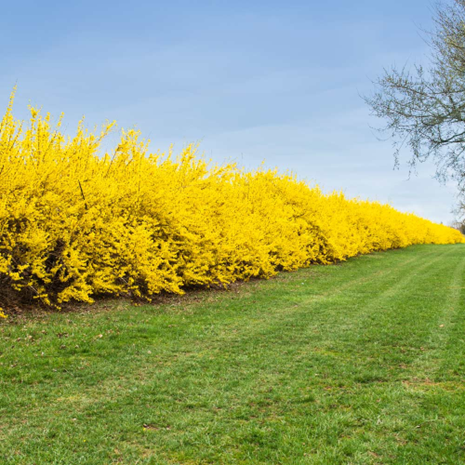
Forsythia, seemingly out of thin air, are there all at once, wedging themselves between neighboring houses like audacious exclamation marks, giving shape and contour to roadways and parks that spent the winter looking vague and unfinished, erupting along driveways and highways as though someone had run a wet brush of radiance along the sleepy margins of the world.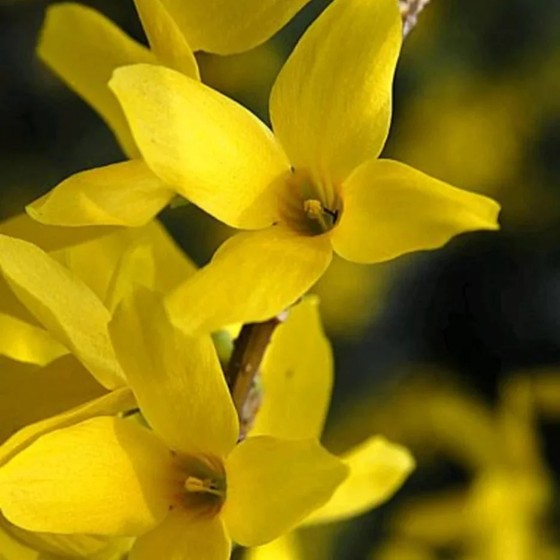
Some forsythia wear their yellow with refined elegance, each branch pruned with the exacting care of a Swiss watchmaker. Others look like Muppets who cut their own hair on a dare and without a mirror, the resulting mess buoyantly lopsided, gloriously at peace with the chaos.
In some places, forsythia spill out in full uninterrupted cascades, and in others they thread themselves between trees, bright interlopers who have staked their ground with unapologetic self-assurance. Curated on a manicured lawn or gone fully wild at the edge of a park or along a country road, forsythia are everywhere, their splendor irresistible.
Forsythia are declarative. They are nature's way of clearing her throat before issuing the pronouncement the world has been waiting months to hear. Winter, for all its occasional snowy grandeur, is essentially a long silence of muted colors and muted light, the landscape turned inward and uncommunicative. And then forsythia arrive like the brass section of an orchestra in full crescendo, filling available space with something that is as much a feeling as it is color. The yellow is almost unreasonably cheerful. It is the yellow of a child's crayon drawing of the sun, of taxi cabs and ripe lemons, of buttered corn on the cob and a shiny slicker hinting at the April rains to come.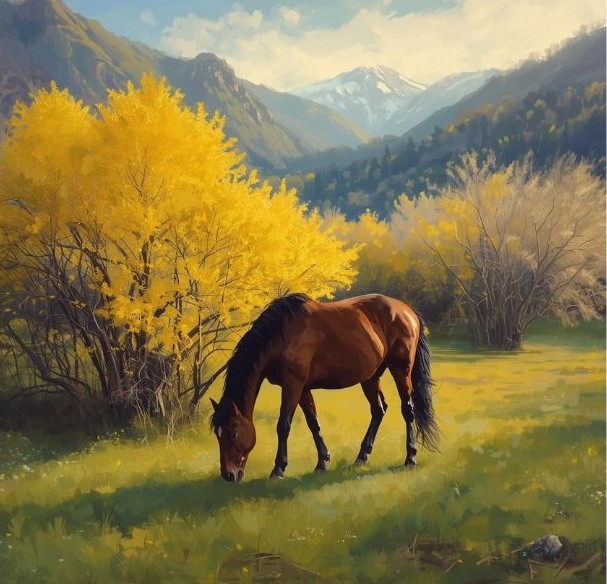
Forsythia vibrancy is rousing, the vernal alarm clock for the soul.
When I was young, the appearance of forsythia carried a specific and thrilling cargo of association. Those tumbling yellow branches meant that the school year was beginning its last lap, a graceful lean toward the promise of summer. That luscious countdown, unofficial but keenly felt, had begun.
Forsythia arrive just as baseball season gets underway, when the grass at the stadium is too green to be believed and anything feels possible. Every April brings with it the fantasy, giddily irrational yet renewable, that maybe this will be the year the Yankees go undefeated. The forsythia will bloom, the Yankees will take the field, and hope, that stubborn, gorgeous, entirely unearned thing, will blossom right along with them.
There is something about forsythia that is inseparable from the essence of early spring. That first warmth, in the days when the forsythia shrubs are still yellow, feels like a gift to which you surrender the way you submit to something you are not quite sure is real. It feels new, the way things only feel new when they have genuinely been missed.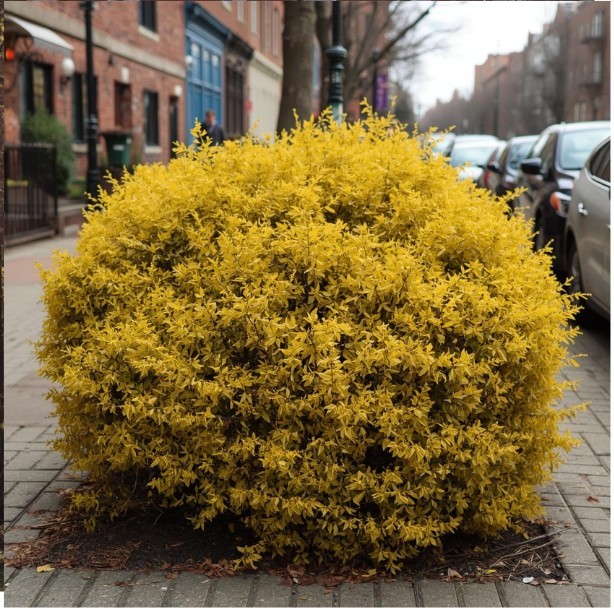
But that is the other thing about forsythia, they do not retain their colorful exuberance. Two weeks, sometimes even sooner, the yellow blossoms shed without ceremony. Thousands of small suns extinguish as the shrubs step back from the microphone and the green leaves discreetly, dutifully replace them, virtually overnight. The emerging foliage is lovely still, but it is indistinguishable from the burgeoning growth filling out in the lengthening days of spring. By then, the warmth will have settled in, familiar and expected. But right now, in these brief luminous days, forsythia still carry the wonder of surprise.
And perhaps that is the very point. Their beauty is inextricable from their brevity. Forsythia do not linger or negotiate. They arrive in totality, hold nothing back, and then transform, gracefully and without discussion, into something more background than center stage. It is, in this sense, a kind of lesson, a yearly reminder that the most brilliant things are often also the most fleeting, and that their transience is not a flaw but the very source of their allure.
By the time their yellow fades, the Yankees will be 9 and 3. Encouraging. Promising, even. But the undefeated season will have to wait, as it always does, for another year.
The forsythia, for their part, have already turned green. They have done their work. Spring, fully and officially, has begun.