That’s, um, Interesting
I've said the word thousands of times. So have you. And in virtually every case, it was the most useful word in the room, useful, that is, for avoiding any actual thought whatsoever.
Think about the last time someone cornered you at a party and spent twelve minutes explaining their strategy for avoiding traffic heading into the Lincoln Tunnel. That’s when the word makes its appearance.
"Interesting," you remarked, nodding with the well-honed sincerity of a diplomat. What you meant, of course, was please stop talking to me.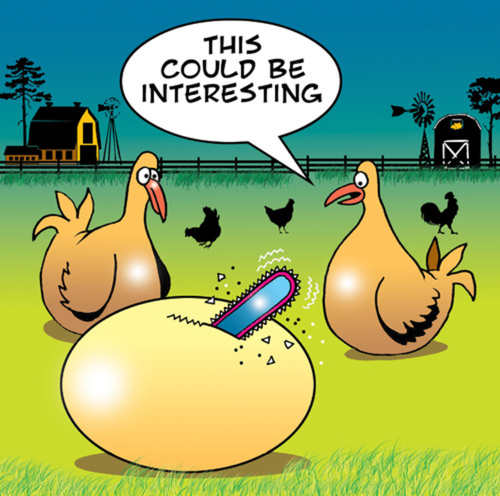
Or the time a colleague walked me through their new prefix system for naming documents, WK=Work, PS=personal, TX=taxes. "Interesting!" I exclaimed with feigned enthusiasm. Translation: I will never think about this again. Nor would it be possible since I’ve already forgotten it.
Interesting. The word is a masterpiece of linguistic evasion.
I became painfully aware of its vacuousness at a dinner party a few years ago. There I was, trapped, er, I mean seated next to a man who had apparently devoted his retirement to researching the migratory patterns of a specific subspecies of freshwater snail. He was passionate. He was detailed. And oh, was he thorough. Withering from a rapidly shrinking will to live and armed with nothing but a rapidly depleting glass of Chardonnay, I cycled through "interesting," "really interesting," and the turbo-charged "incredibly interesting" at approximately ninety-second intervals.
He never noticed.
Why would he? Interesting asks nothing of the listener and reveals nothing to the speaker. It simply fills the air. It buys time. It creates the impression of a mind at work when the mind has, in fact, silently checked out and has gone wandering. Like the time I sat muttering “interesting” every thirty seconds while a seatmate on a cross-country flight explained his ongoing dispute with his homeowners’ association with the urgency of someone describing a near-death experience. My mind, meanwhile, had already landed and was waiting at baggage claim.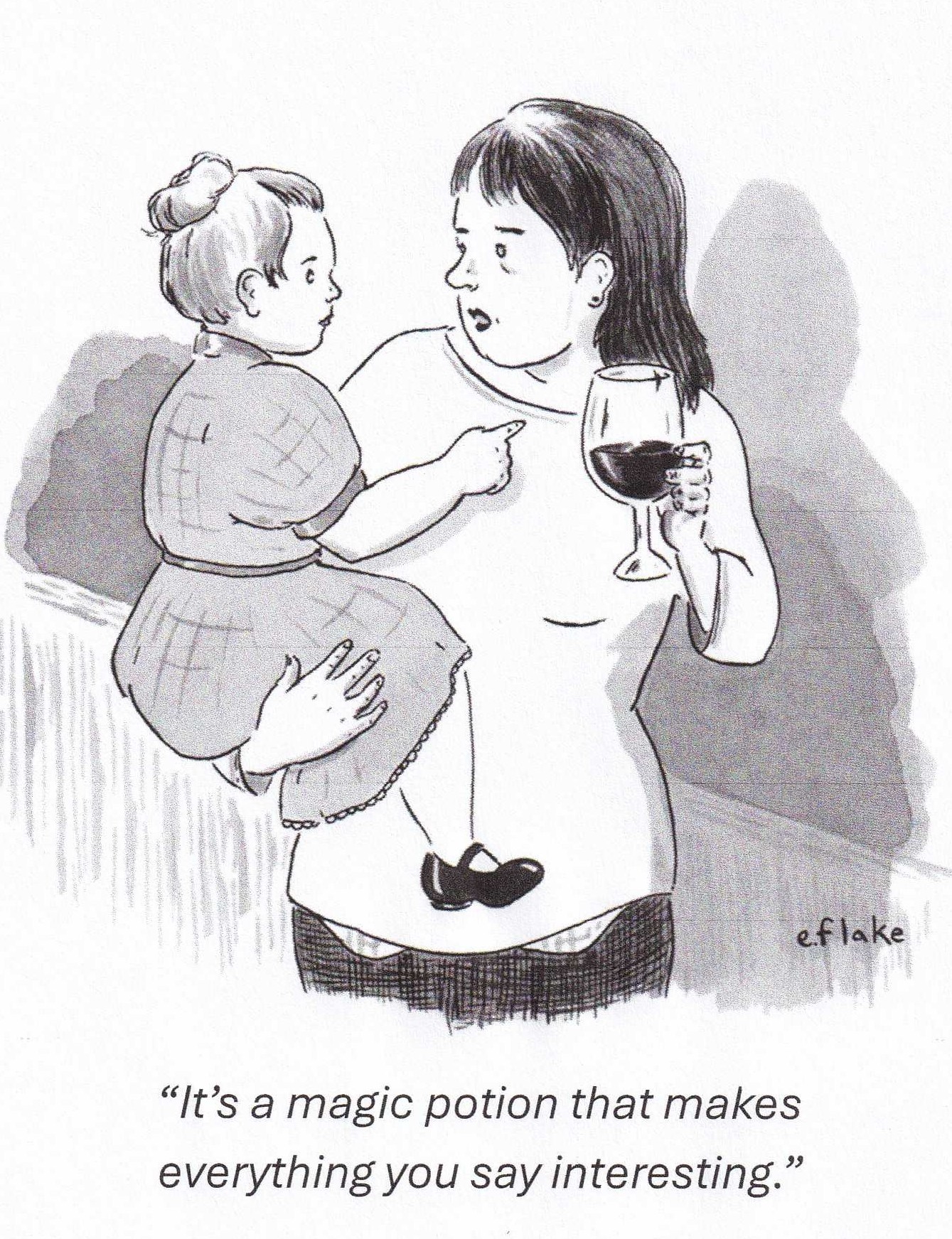
Consider the word's deployment in the workplace, where interesting does some of its most prodigious heavy lifting. Brought in as a consultant, I was asked by a company to observe a two-hour strategic planning meeting, the kind of arrangement where I sat unobtrusively against the wall with a legal pad and a swiftly cooling cup of coffee, present but explicitly not participating. Which, as it turned out, gave me an unobstructed view of something unexpectedly revelatory.
I started tallying. By the end: 183 utterances of the word interesting. Every time someone floated an idea that was either half-baked, misguided, or simply not worth the oxygen required to discuss it, the room responded with a tempered chorus of "that's interesting." The idea would then be written on a whiteboard, assigned to a subcommittee, and never mentioned again.
Without anyone deciding it, without anyone announcing it, the room had arrived at a shared and unspoken understanding: interesting was the designated exit ramp. The whiteboard was not a place where ideas were parked. It was where they went to die.
The ideas that actually had legs, those that generated substantive responses, never went near the whiteboard. They were too busy being discussed!
At one point, I watched a junior associate propose something that was, by any reasonable measure, genuinely good – practical and well-reasoned – the kind of idea that deserved a hearing. A senior member of the group hesitated, then proclaimed, "Interesting." He may well have meant it, thinking the idea had merit. But the interesting code had already taken hold, baked so firmly into the unspoken rules that it overpowered even a consideration of intent.
The associate’s idea was written on the whiteboard. It was assigned to a subcommittee. And like everything else that had found its way there that afternoon, without fanfare, without objection, without anyone in the room realizing what they had all agreed to, it was consigned to the ash heap of history.
Several times during that session, I caught myself leaning forward, eager to interject before remembering that I was there only to observe, not to intervene.
Interesting was the meeting's most productive participant. It absorbed everything and committed to nothing. And no one in that room, not even the senior person who may have meant the opposite, had concocted this plan. The word, by virtue of its sheer emptiness, was the most dominant force in the meeting.
Another time, I once overheard two colleagues at a nearby cafeteria table discussing a proposal.
"What did you think of it?" she asked, her whole posture tipped toward him in anticipation.
"I thought it was interesting," he replied, with the enthusiasm of someone reading a lease agreement.
"Interesting good or interesting bad?" her face deflating like a balloon that had sprung a leak the moment he opened his mouth.
"Just… interesting," he returned, more blandly than before, if that was even possible.
“That tells me absolutely nothing," she said.
"I suppose," he mumbled. "Isn't that interesting?"
She stopped asking. Which, upon reflection, may have been the intended outcome all along.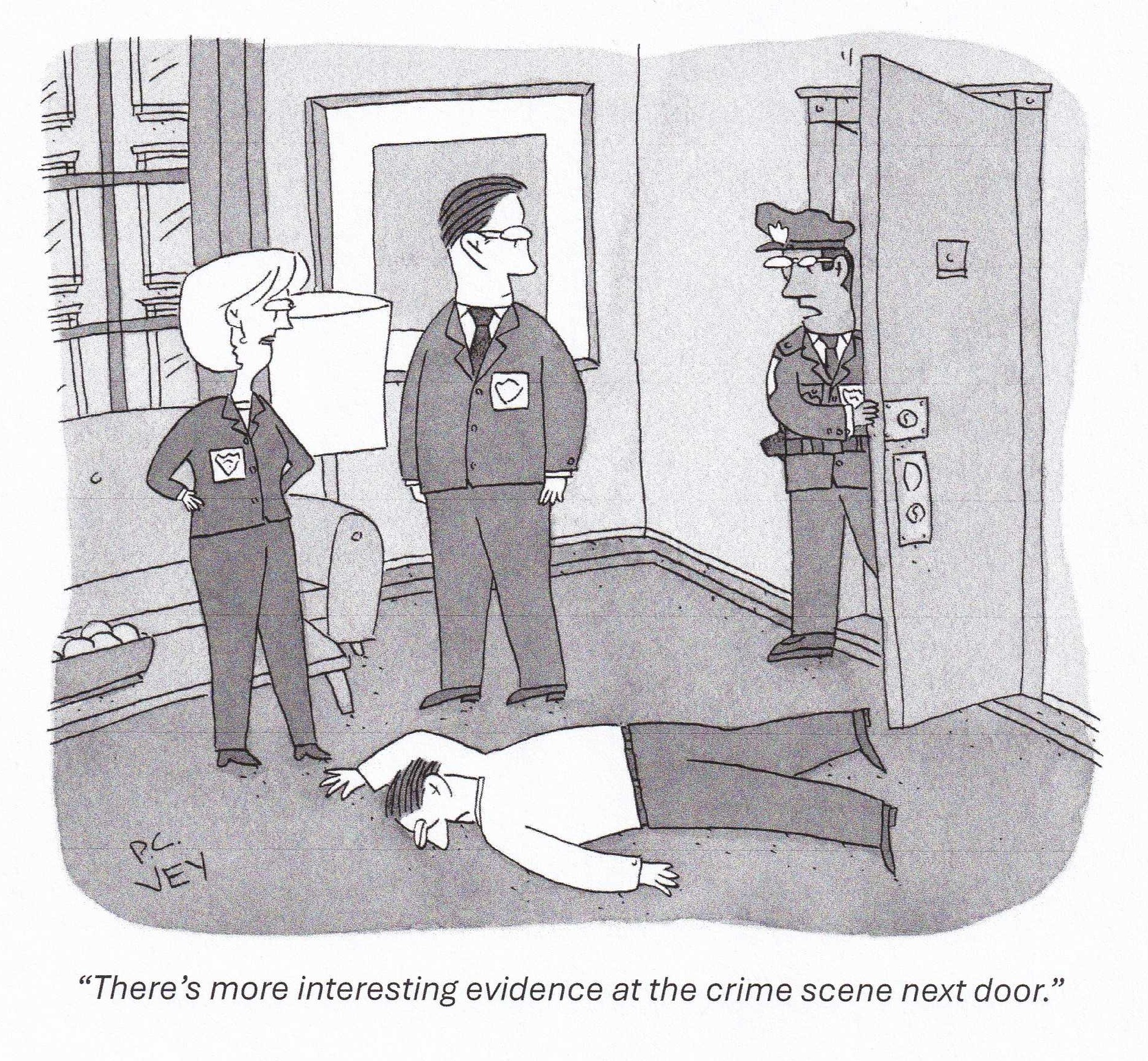
Interesting is among the world’s great devices for advancing nothing. It hovers neutrally above the fray of actual opinion, refusing to take sides. Politicians have built entire careers on invoking the word to tap dance around a commitment. “The proposal to limit campaign spending is interesting. We’ll take it under advisement.”
And then there’s the use of interesting to showcase one’s ego. At a wine tasting I once attended under the misapprehension that it would involve more tasting and less commentary, a self-appointed expert held his glass to the light, inhaled as though only his nose knew what the rest of us could not be trusted with, and declared the bouquet 'interesting in its ambiguity.” The room murmured in agreement. Here, the word was doing the work of an entire personality, specifically, the kind that peddles obscurity for sophistication.
Of course, there’s an entirely different category of interesting, the type deployed not out of haughtiness but out of sheer survival. Anyone who has ever been shown 47 photos of a friend's trip to the Grand Canyon knows exactly the version I mean. Each image virtually indistinguishable from the last, each met with a progressively more determined "interesting," until the word is less a response than a life raft.
Few words earn their keep quite so effectively through the tactical use of vagueness. "That's interesting" can mean I agree with you. I disagree with you. I wasn't listening. I was listening but wish I hadn't been. I have no idea what you just said because I was busy calculating exactly how many minutes remained before a socially acceptable exit becomes available. I know exactly what you said and find it mildly alarming. It does all of this without obligation, without consequence, and without anyone leaving the conversation feeling overtly insulted.
In this way, it is one of civilization's great social lubricants, a small, smooth word that keeps the gears of human interaction turning without requiring anyone to actually oil them. The word’s very neutrality is what fuels this formidable power. The dictionary, itself the beacon of neutrality, defines interesting as "arousing curiosity, holding attention." And therein lies the extraordinary irony, that we so often use the word when our curiosity has depleted and our attention has gone AWOL.
There is an art, of course, to its delivery. Tone is everything. Interesting said with a rising inflection conveys curiosity. Uttered flatly, it suggests polite dismissal. Drawled slowly, with a slight narrowing of the eyes, it implies that you have uncovered something troubling and are choosing, for now, to keep it to yourself.
I once watched a friend execute all three versions over the course of a single dinner as his recently divorced sister described, with increasing animation, a plan to sell her house and move across the country for someone she had been seeing for three weeks. The first interesting was warm, the supportive reflex of someone who knew the traumas of the divorce. The second arrived when his sister mentioned she had already called a realtor. The third, slow and careful, was in response to the casual mention that the suitor was also, technically, still finishing up a divorce of his own.
My friend finished his wine and said nothing more. Sometimes, interesting is less a failure of honesty than the kindest available option, not evasion necessarily, but a soft cushion placed between the truth and someone you love.
Not all uses are so tender. An acquaintance spent the better part of a neighborhood barbecue explaining his new dietary philosophy, which, as far as I could follow, involved eating only foods that were either beige or had existed before the Roman Empire.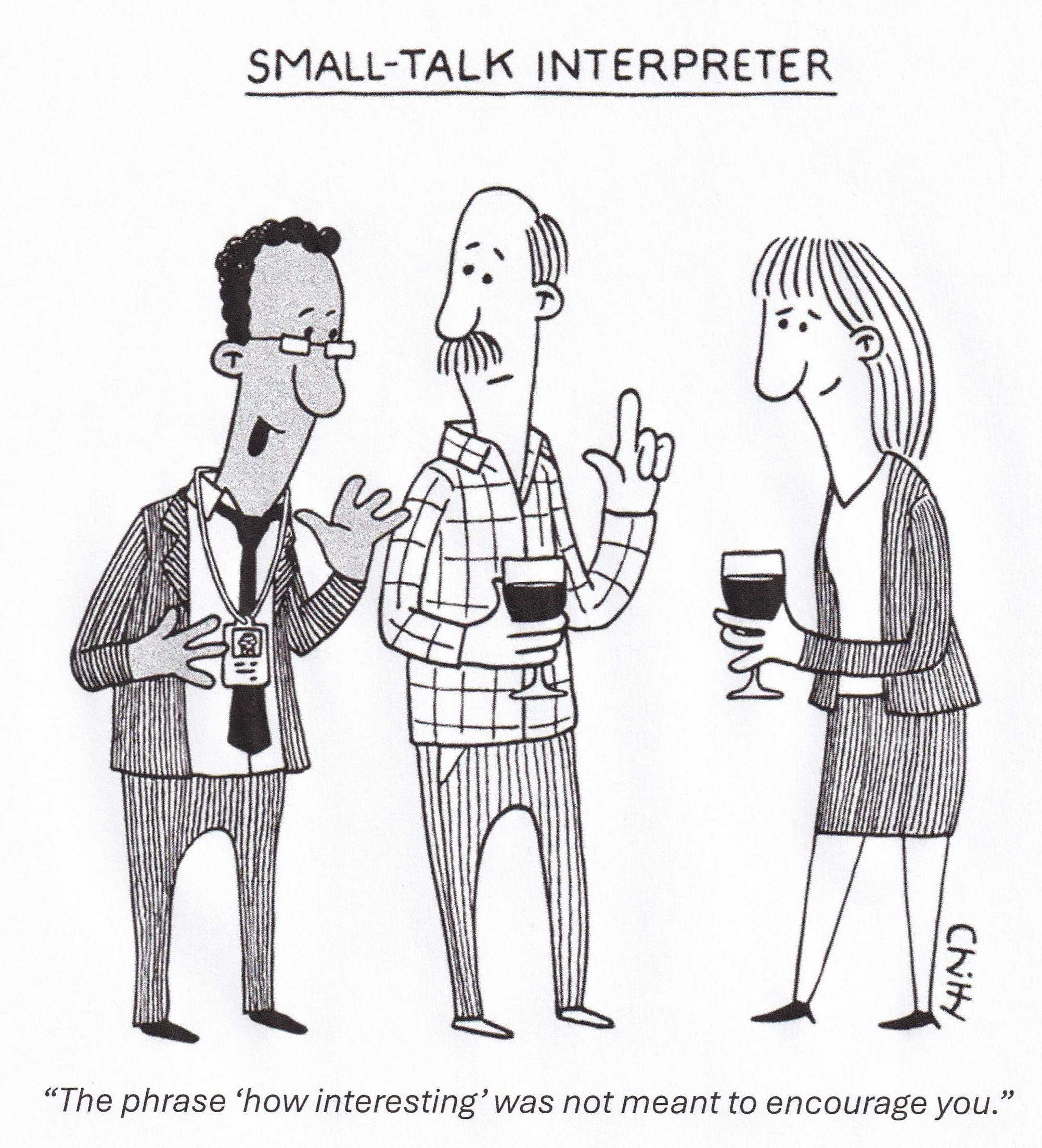
"So, no tomatoes?" I asked.
"Introduced to Europe in the 1500s," he declared, with the gravity of a person delivering a serious diagnosis.
"And no coffee?"
"Arabian Peninsula, ninth century. Too recent."
I looked down at my plate, which, by his accounting, was a crime scene of post-Roman ingredients. I turned back toward him, and with what I hoped would pass for sincere curiosity rather than barely contained disbelief, I offered, "That is… interesting."
"Right!" he bubbled, lighting up. "Most people don't even think about it."
"Most people don't," I deadpanned, which was both true and not remotely what I meant.
He has since lost eleven pounds, which he attributes to the diet. I attribute it to the fact that there is almost nothing left to eat. He called it a breakthrough. I called it interesting.
While interesting sure seems like an ideal tool for navigating the social landscape, it doesn't hold up everywhere. My friend, who is a therapist, told me she was trained never to say "interesting" to a client. "It's a deflection," she explained. "It shuts down meaning while pretending to open it up."
"What do you say instead?" I asked.
"I say, 'Tell me more about that.'"
"And that's better?"
"It requires the other person to actually build on what they're saying."
I considered this carefully. "That's interesting," I said.
She stared at me for a long moment. "You're doing it right now."
"You’re right," I relented. "I meant to say it’s fascinating."
She frowned.
Later, I realized why. Fascinating is interesting in brightly colored clothing.