When Being Late Becomes Being Right on Time
I was late for an important meeting last week. Not egregiously late, just a few minutes, and entirely my own fault. It was the first day of school in New Jersey, and I had forgotten, as I seem to every year, with impressive consistency, to leave extra driving time for the school buses.
Thus, I was surprised to find a queue of slow-moving cars as I rounded a corner. I was about ten cars back from the front, now committed to staying in line as others already pulled in behind me. And all the way up front, looming above the SUVs, was that universally recognized shade of yellow, moving with the unrushed confidence of a ritual that has been playing out every September for generations.
The school bus was finding its way, as school buses always do on the first day, toward the right location, easing through a neighborhood humming with its morning rhythm. I was not, to put it lightly, feeling especially patient about any of it.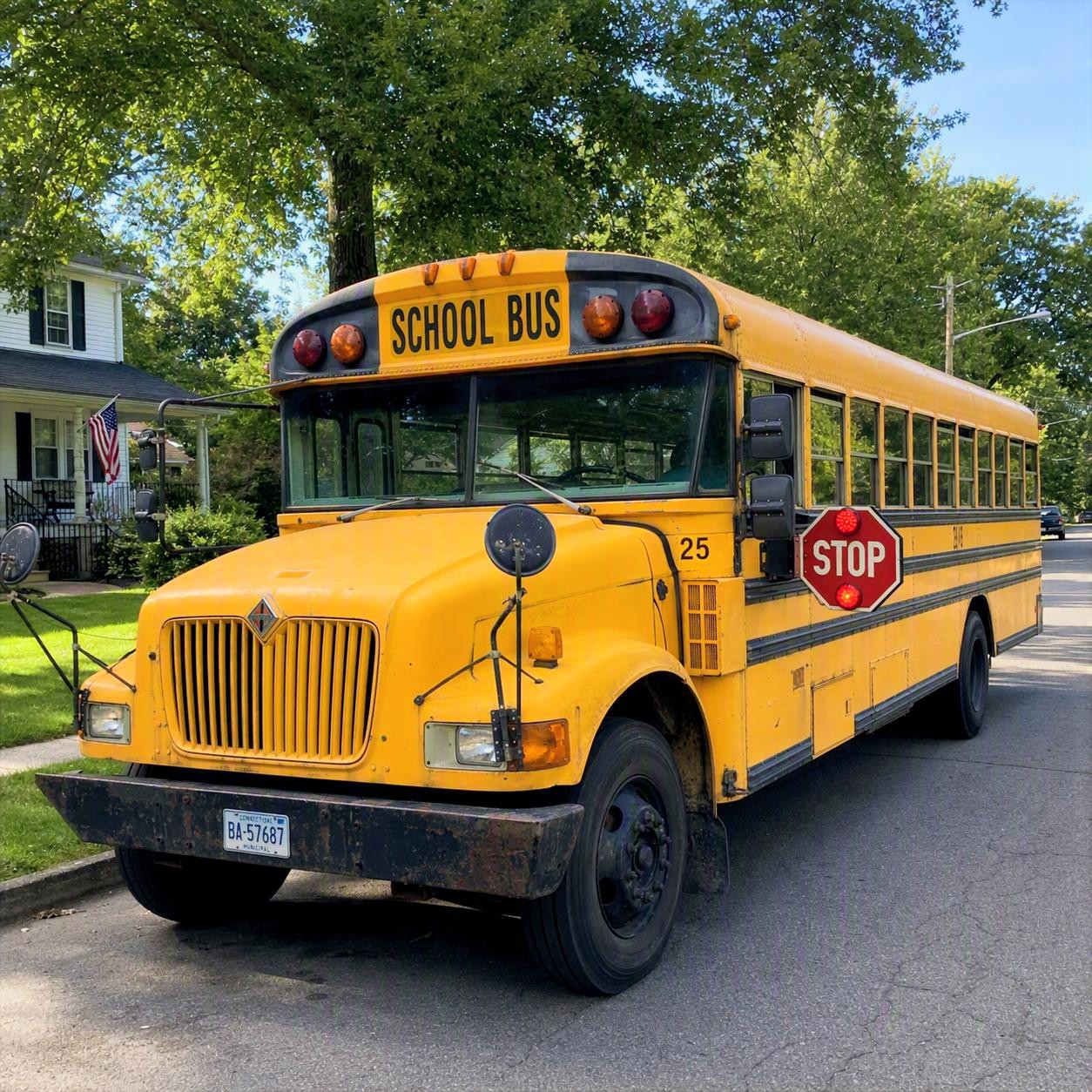
The bus slowed and stopped on the manicured suburban street, having reached its intended spot. The red octagonal STOP sign popped out from the driver's side like a jack-in-the-box at the end of its tinny cranked-out music.
A dad and his little girl, I'd guess about seven years old, walked briskly down the sidewalk, hand in hand. When she spotted the bus, she abruptly pulled her hand away as though deciding, in that very instant, that she was no longer a child who holds her father's hand in public. Without looking back, she disappeared inside. A few seconds later, the sign retracted, the doors closed, and the line of cars proceeded.
Suddenly, being late for my meeting seemed beside the point. My thoughts turned to that father, caught in one of those brief, unanticipated moments of real significance that parenthood delivers without warning.
I felt a pang of something familiar and smiled.
Every parent knows the bittersweet tug of that exchange, a hand released, a step taken, a new chapter opened, that feeling lingering long after the bus has pulled away. It is, after all, one of parenthood's most recurring and tacit negotiations, which always seem to arrive ahead of schedule, an irreversible transfer of dependence into independence, played out in doorways and sidewalks and bus stops across the country.
I could relate to the dad completely. My own children, each at their own chosen moment, had delivered the same wordless message, crossing some threshold that felt exactly right to them and, invariably, a little too soon for me.
That moment at the bus stop belongs to all of us. After all, there are roughly half a million school buses on American roads on any given school day. And somewhere, at almost any hour of the morning, that same negotiation is being conducted in silence, a parent standing at the curb, watching their child climb the steps of the big yellow bus as the child they had been at breakfast and passing through its door as the person they are now becoming.
And here is what strikes me most about that image, and about every version of it playing out across the country – the big yellow bus remains the same while the people boarding are forever evolving, usually in increments so small they escape notice, though occasionally in moments so arresting they stop you cold.
The bus is the one constant in an ever-changing story, the witness to a continuous procession of children stepping away, one definable moment at a time, from the hands that love them most. For a parent standing at a curb, the returning hand may feel like a long way off, but the familiarity of that yellow presence offers something close to reassurance, a reminder that this, too, is a ritual as old and as durable as the bus itself.
The yellow is actually the standardized color used for North American school buses and is officially called National School Bus Glossy Yellow. It is the same yellow it has always been, a color chosen precisely because it appears at the edges of human peripheral vision faster than any other. The shape is the same as ever, boxy, utilitarian, indifferent to the aerodynamic ambitions that have reshaped virtually every other vehicle on the road.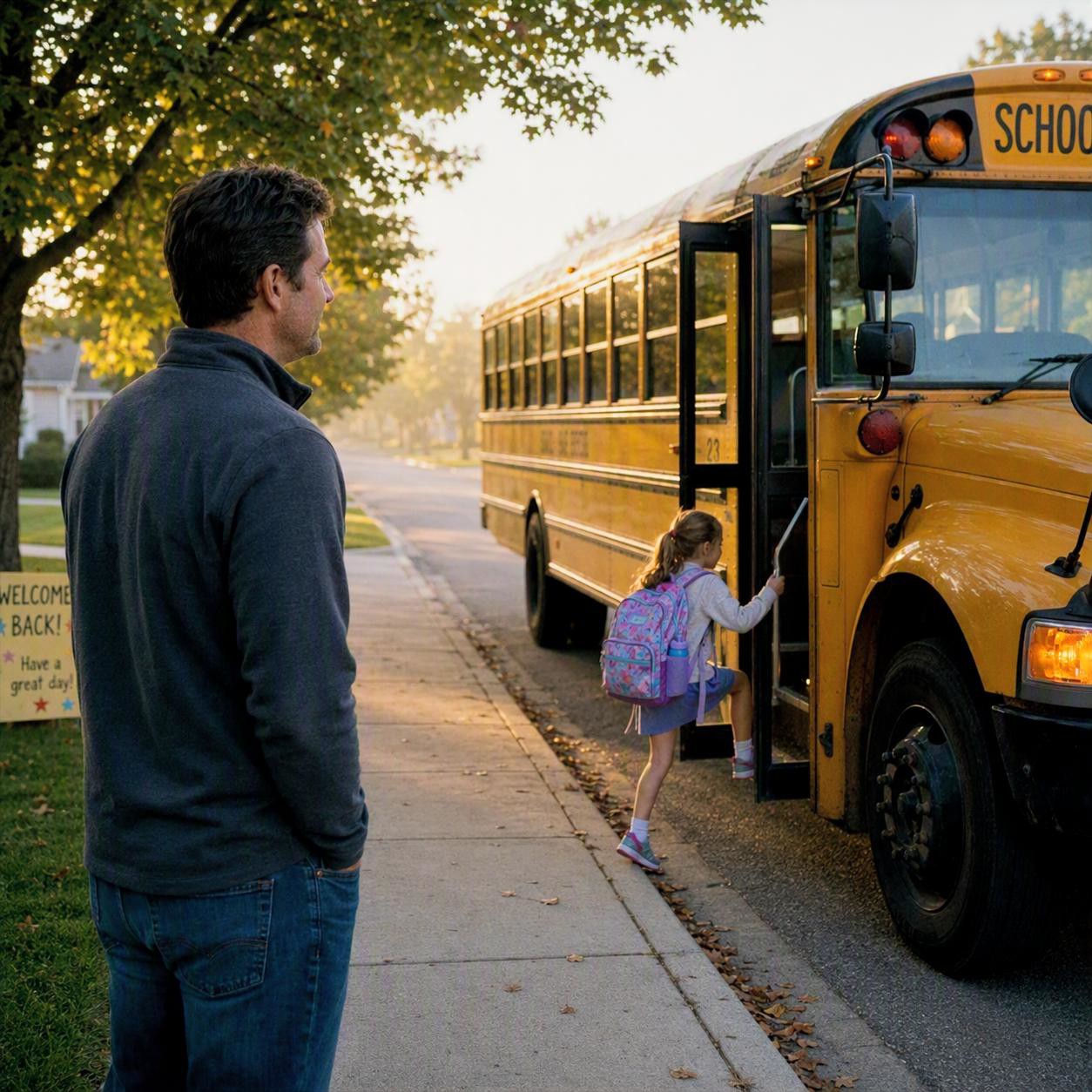
For the better part of a century, the school bus has defied reimagination. While the world has been busy upgrading everything else, the school bus has held its form with a sort of defiant institutional stubbornness, remaining unmistakably itself. The bus will be there tomorrow, and the day after, exactly as it was that day, holding steady at each stop, while its passengers grow and become their next selves.
That poignant exchange between the father and daughter had rekindled something I had long since stopped thinking about, and it reminded me that the moment had more to offer than nostalgia alone.
That gesture of letting go tells the whole story, really. That hand, pulled away so assertively on a September sidewalk, will pull away again and again, from one threshold to the next, each withdrawal a small declaration of independence, eventually and lovingly finding its way back – at a graduation, perhaps, or midway down the aisle toward an altar – cumulatively mapping the passages of a story still being written, until the giving of it feels, at last, like a circle completing itself.
The world occasionally stages these fleeting, unexpectedly restorative moments tucked inside what we mistake for inconveniences. That red octagonal sign, on that September morning, was doing exactly that, asking for a moment's pause in the service of acknowledging something so easily mistaken for unremarkable that its meaning slips past unnoticed, until something beckons you to slow down and take it in.